Flooding and the need for emergency floodwater removal can develop with surprising speed. One minute a road, yard, car park or commercial premises may be operating normally; the next, intense rainfall can leave large areas covered in standing water.
For businesses and organisations, the consequences can be considerable. Floodwater can restrict access, disrupt day-to-day operations, damage equipment and property, and create additional cleaning and waste-management challenges.
With the latest Met Office outlook indicating an increased likelihood of wetter-than-average conditions during autumn 2026, together with a greater chance of unsettled and windy weather later in the season and into early winter, now is a good time to consider how you would respond if flooding affected your site.
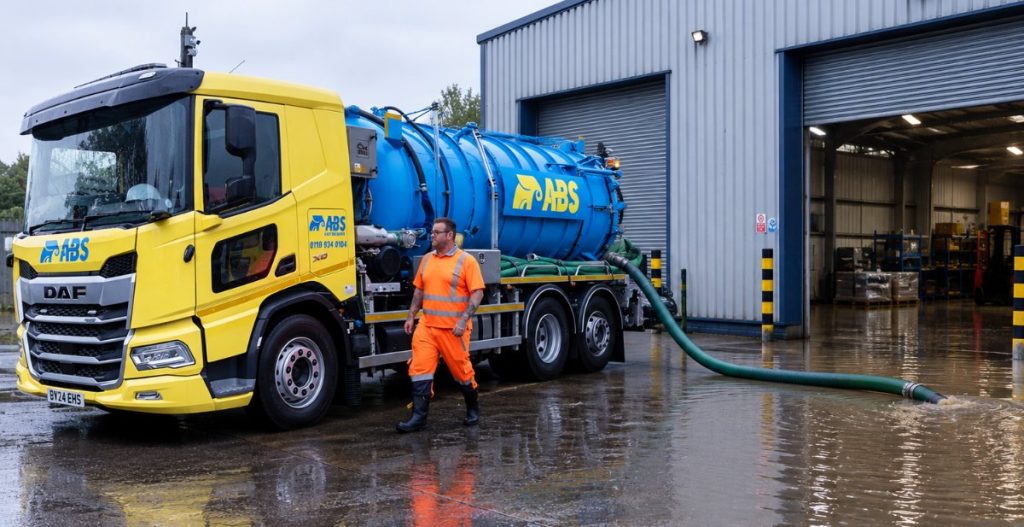
At A Better Service, we provide professional emergency floodwater removal and wastewater services to help businesses, organisations and other customers deal with serious water-related incidents.
Need emergency floodwater removal?
Call A Better Service on 0118 934 0104 to discuss your requirements.
When water is already accumulating, there is little value in waiting. Having an experienced team, you can contact can help you respond quickly and start getting your site back under control.
Why could flood risk be a concern this autumn and winter?
Weather forecasts cannot tell us exactly when or where flooding will occur. El Niño is also only one of several factors that influence UK weather.
However, the current Met Office outlook does provide a reason for organisations to take the possibility of heavy rainfall seriously.
The Met Office says the chances of a warm and wet autumn are currently around one-and-a-half to two times higher than would normally be expected, while an increased likelihood of windy conditions emerges later in the season. Historically, El Niño events have also tended to be associated with warmer, wetter and stormier conditions across the UK and northern Europe during late autumn and early winter.
That does not mean flooding is inevitable. It does, however, make sensible preparation worthwhile.
For businesses, facilities managers, local authorities, infrastructure operators and other organisations, it is worth considering what would happen if a period of exceptionally heavy rain left large volumes of water on your site.
If you already know that your site could be vulnerable to flooding, contact A Better Service now to discuss how we may be able to support you in an emergency.
Flooding is not only a problem for properties beside rivers
It is easy to associate flooding with rivers overflowing or coastal water reaching inland areas. In reality, floodwater can come from several different sources.
The Environment Agency’s National Flood Risk Assessment shows that approximately 6.3 million properties in England are in areas at risk of flooding from rivers, the sea, surface water or a combination of these sources. Around 4.6 million properties are in areas at risk from surface water flooding alone.
This is particularly important for businesses in urban and built-up areas.
Large areas of concrete, tarmac, paving and other hard surfaces prevent rainfall from naturally soaking into the ground. During a particularly intense downpour, water can run rapidly towards drains, gullies and low-lying areas.
If the drainage network cannot cope with the volume arriving in a short period, water can accumulate remarkably quickly.
That can mean flooded roads, yards, loading bays, car parks, warehouses, plant rooms and other operational areas – even when the premises are nowhere near a river.
If your commercial premises has been affected by surface water flooding, A Better Service can help with emergency water removal. Call 0118 934 0104 for assistance.
What are the different causes of flooding?
Understanding where floodwater comes from is useful when considering the potential risks to your premises.
Surface water flooding
Surface water flooding happens when rainfall cannot drain away or soak into the ground quickly enough.
It can occur following an intense storm when the amount of rainfall arriving over a short period exceeds the capacity of local drainage infrastructure.
Roads, car parks, industrial yards and other hard-surfaced areas can be particularly susceptible because rainfall quickly becomes surface run-off.
The scale of the issue is significant. The Environment Agency estimates that around 4.6 million properties in England are located in areas at risk of surface water flooding, including approximately 1.1 million in areas classed as high risk.
For businesses, surface water can create an immediate operational problem. Access may become difficult, vehicles may be unable to move safely and water can enter buildings or accumulate around equipment.
If heavy rain has left your site under water, don’t wait for the situation to become worse. Contact A Better Service for emergency floodwater removal.
River and watercourse flooding
Heavy rainfall can also cause rivers, streams and other watercourses to rise.
Where water levels exceed the capacity of the channel, surrounding land can become flooded. The situation can become more complicated when high river levels prevent surface water from draining away efficiently.
The Environment Agency notes that flooding can involve more than one source. For example, high river levels can impede surface water drainage and increase flood impacts.
For businesses close to rivers or watercourses, this can create a particularly challenging situation.
If your business or site has been affected by an overflowing watercourse, speak to A Better Service about emergency water removal and wastewater support.
Groundwater flooding
Groundwater flooding happens when the water table rises sufficiently for water to emerge at the surface or enter lower-lying areas.
Unlike some forms of surface water flooding, groundwater flooding can persist for much longer once it begins.
After an exceptionally dry summer, groundwater levels may initially be lower, meaning groundwater flooding may take longer to develop. However, prolonged periods of wet weather can gradually change conditions beneath the surface.
For organisations managing vulnerable sites, it is therefore important to consider both immediate flood risks and the possibility of longer-lasting water problems.
Sewer and drainage flooding
Drainage systems can come under enormous pressure during periods of intense rainfall.
The problem may be made worse by blockages, restricted capacity or large quantities of water entering the system at the same time.
In urban environments, several problems can occur together. Surface water may be unable to drain, sewer systems may become overwhelmed and nearby watercourses may rise.
The result can be large quantities of standing water in places where it can cause significant disruption.
If your drainage system has been overwhelmed and floodwater needs removing, call A Better Service on 0118 934 0104.
Why is floodwater such a problem for businesses?
The immediate concern may simply be getting rid of the water, but flooding can create a much wider range of problems.
Water can affect:
- Commercial buildings
- Warehouses and storage areas
- Industrial yards
- Loading bays
- Car parks
- Access roads
- Plant rooms
- Production areas
- Equipment and machinery
- Drainage infrastructure
- Outdoor storage areas
Floodwater may also contain silt, rubbish, sewage, animal waste, oil, chemicals or other contaminants depending on where it has come from.
Government health guidance warns that floodwater can contain contaminants and that sewage, human waste and animal waste can enter floodwater following flooding.
That is why floodwater should not simply be treated as clean rainwater.
Removing standing water promptly can be an important first step in allowing cleaning, assessment and recovery work to begin.
If floodwater has entered your commercial premises or accumulated around your site, contact A Better Service as soon as possible.
Emergency floodwater removal when you need it
Flooding rarely happens at a convenient time.
It might follow an overnight storm, occur during a weekend or develop outside normal working hours. When large quantities of water are affecting a site, being able to contact an experienced wastewater and drainage company can make a significant difference.
A Better Service provides 24/7 emergency floodwater response, helping customers deal with unexpected flooding and water-related incidents.
Our experienced team can provide practical support when significant quantities of water need to be removed from affected areas.
We understand that every incident is different. The volume of water, location, access and nature of the site can all affect how an emergency needs to be handled.
Our wider experience in wastewater and drainage services means we can approach each situation with the practical knowledge needed to identify an appropriate response.
Flooding right now?
Call A Better Service on 0118 934 0104 for 24/7 emergency floodwater assistance.
Supporting businesses, organisations and infrastructure
Flooding can become a large-scale operational issue very quickly.
A business may need additional support to remove water from its premises. A local authority may require assistance following severe weather. Infrastructure or wastewater operators may need additional capacity when their own resources are under pressure.
A Better Service can provide additional support where emergency water removal and wastewater services are required.
Our approach is straightforward: understand what has happened, establish what support is required and provide an appropriate response.
For organisations responsible for commercial sites or infrastructure, having a reliable contact available outside normal working hours can also form part of a wider flood-response plan.
If you are responsible for a site where flooding could cause significant disruption, speak to A Better Service before the next major rainfall event.
Flooding can happen surprisingly quickly
One of the biggest challenges with surface water flooding is the speed at which conditions can change.
An intense period of rainfall can send water flowing across hard surfaces towards low points, entrances and drainage systems. If the network cannot handle the volume, standing water can develop rapidly.
This is particularly relevant in built-up locations where there are extensive areas of impermeable ground.
The Environment Agency’s latest national assessment highlights the scale of surface water risk across England, with around 4.6 million properties in areas at risk.
For a business, the practical question is not simply whether flooding has happened before. It is whether the consequences of a sudden flood would be serious enough to affect your operations.
If the answer is yes, having an emergency contact to hand is a sensible precaution.
What should you do if your premises floods?
If floodwater reaches your site, safety should come first.
Floodwater can contain contaminants and physical hazards, so people should take appropriate precautions and follow relevant official guidance. Government advice highlights the potential presence of sewage, waste and other contaminants in floodwater.
Depending on the circumstances, useful steps may include:
- Keeping people away from unsafe or contaminated water
- Restricting access to affected areas
- Following site-specific emergency procedures
- Assessing whether utilities or electrical systems have been affected
- Contacting the appropriate emergency or infrastructure organisations where necessary
- Arranging professional removal of significant quantities of floodwater
- Beginning cleaning and recovery once the area has been made safe
For larger commercial sites, it can be particularly useful to have an emergency response plan that identifies who should be contacted and what equipment or services may be required.
Need professional floodwater removal? Contact A Better Service on 0118 934 0104, 24 hours a day.
Don’t wait until you are dealing with standing water
Nobody can say exactly what the UK’s weather will bring over the coming months.
The Met Office is clear that long-range forecasts describe probabilities rather than individual weather events, and El Niño is just one of several factors influencing UK conditions.
What is clear is that intense rainfall can place considerable pressure on drainage systems, and surface water flooding represents a significant risk across England.
That makes now a good time to consider your contingency arrangements.
If your business has previously experienced flooding, or you operate from a site where heavy rainfall could create problems, putting an emergency response plan in place before the next storm could save valuable time.
And if water is already causing a problem, you do not have to wait for conditions to improve before looking for help.
24/7 Emergency Floodwater Removal from A Better Service
When flooding affects your premises, you need practical help from a team that understands wastewater, drainage and emergency response.
A Better Service provides 24/7 emergency floodwater response, helping businesses and organisations deal with unexpected flooding and significant volumes of water.
Whether the problem follows intense rainfall, surface water run-off, an overflowing watercourse, drainage failure or another incident, our team can discuss your situation and help determine the appropriate next steps.
Need emergency floodwater removal now?
Call A Better Service on 0118 934 0104.
Our team is available 24 hours a day, seven days a week.
Don’t wait for floodwater to cause even more disruption. Contact A Better Service today for emergency floodwater removal and support.